
Reflecting on Media Consumption in Times of Political Distress, or Something Like That

I am once again apologizing for a long pause between newsletters. Maybe you haven’t noticed! Maybe you’ve been feeling resentful about your $5/month going to waste! Either way, forgive me!
Needless to say, it’s been a very emotionally draining time. Much of the heartache arose during our previous presidential administration over continued violence throughout Gaza, and climate disaster most recently striking my beloved hometown of Los Angeles. But under the new administration, we’ve already seen the president and his team take extreme steps toward worsening these tragedies, in tandem with attacking trans healthcare and personhood, enacting ICE raids, and so many other inhumane acts of hate.
I wrote about activism in a December newsletter, questioning how to help our communities depending on our skills sets, socioeconomic positions, and passions. First of all, it’s so hard to write on this topic without sounding 2017-pink-pussy-hat-coded. Words and phrases like “resist,” “these times,” “show up,” “take action,” feel so trite right now. I’m frustrated because that era of activism didn’t prevent us from another Trump term, frustrated because I thought it could’ve? I think that the alternative to that mid-2010s era of activism, (think Nasty Woman t-shirts, RBG stickers, etc.) is something more radical, and often more localized.
One of my biggest priorities right now is longevity. The onslaught of executive orders and inflammatory statements from this administration is purposefully flooding the media system and depleting resources. I was inspired by this Substack, “Words From Eliza,” written by Eliza McLamb, that explores how to best follow the news. She feels that our impulse to take in as much information as possible comes less from an actual duty, and more from guilt. She wrote, “If I couldn’t directly help, the least I could do was witness. The least I could do was watch, feeling increasingly helpless, feeling increasingly numb.”
I think that witnessing suffering does sometimes feel like our only recourse. But that level of hypervigilance isn’t sustainable, we stop processing anything once we overload on everything. To retain our energy—energy that is desperately needed in the form of financial support, mutual aid, volunteering, etc.—we can’t read the news to the point of “anesthetizing ourselves,” as McLamb says. “How much do I really need to know? Enough to know what I think and how I feel. Knowing any more makes both impossible.”

One of the only things that kept my head above water as I watched favorite neighborhoods burn from 900 miles away was witnessing the immediate community-based action in the face of multiple fires and the toxic destruction they left in their wake. My immediate friends and family are all okay, and the grief I feel can’t be more than one single percentage of what those who lost their homes, livelihoods, pets, and more, are feeling.
Fire distribution efforts from organizations like Mujeres En Acción, The Valley of Change, National Day Laborer Organizing Network, The Sidewalk Project, and LA Food Not Bombs, were instrumental to the city’s survival. These organizations will *continue* to do crucial mutual aid work, in the face of fire recovery and beyond. Seeing support for those in-need during this crisis—particularly the unhoused, elderly, low-income, and/or people who are undocumented—proves the immense power there is in community action.
I’m trying to give more time and space to less media, i.e. not crowding my brain with as much Instagram or nonstop podcast consumption. A few reads that especially hit:
This zine, “Don’t Just Do Nothing to Counter Fascism.”
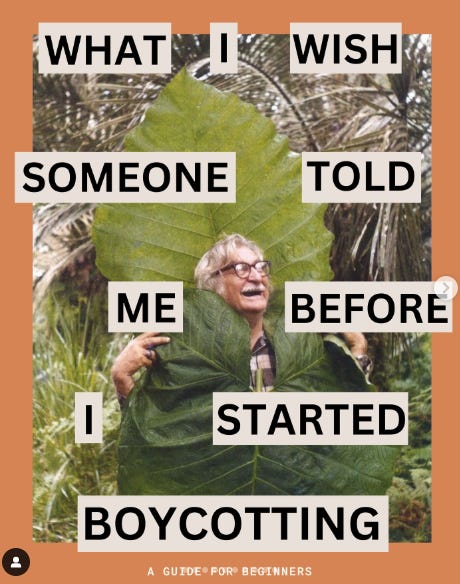
This guide to boycotting and consuming less from @jnaydaily (oops, on Instagram).
One of my favorite Substacks, Internet Princess, by Rayne Fisher-Quann, reflects on homelessness and empathy.
Slowing down and releasing our need for optimization, as written in GQ by Vince Mancini.
The New Republic’s article, The 2000s and the End of American Optimism, by Paul M. Renfro.
As for a welcome distraction:
One New Year’s resolution I’ve kept is listening to a full album every day. I’m allowed to listen to an album I already know, and also allowed to repeat albums! The only rule is that I listen from beginning to end. I think this is slowly reestablishing my relationship to music, which, (you might remember if you’ve been reading this newsletter for a few months) I’ve been trying to win back.
Favorites below, in no particular order:
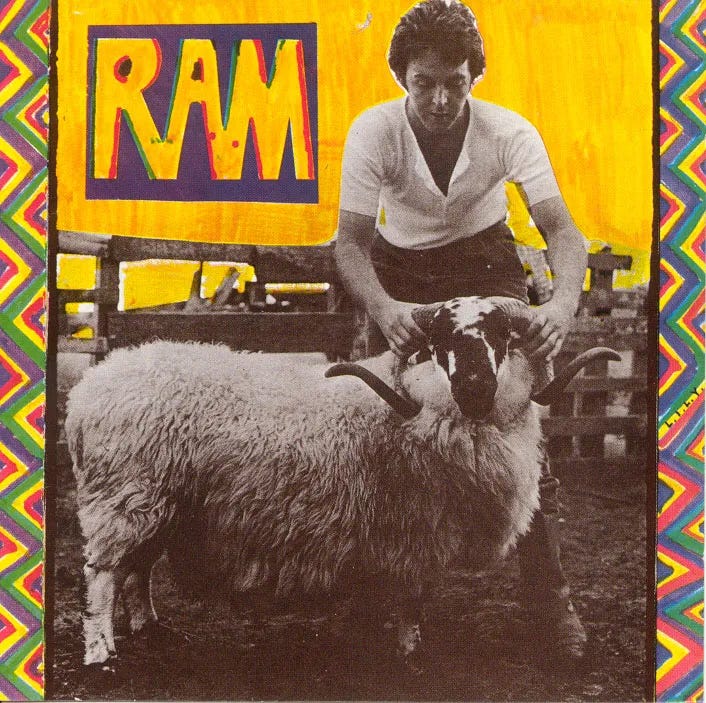
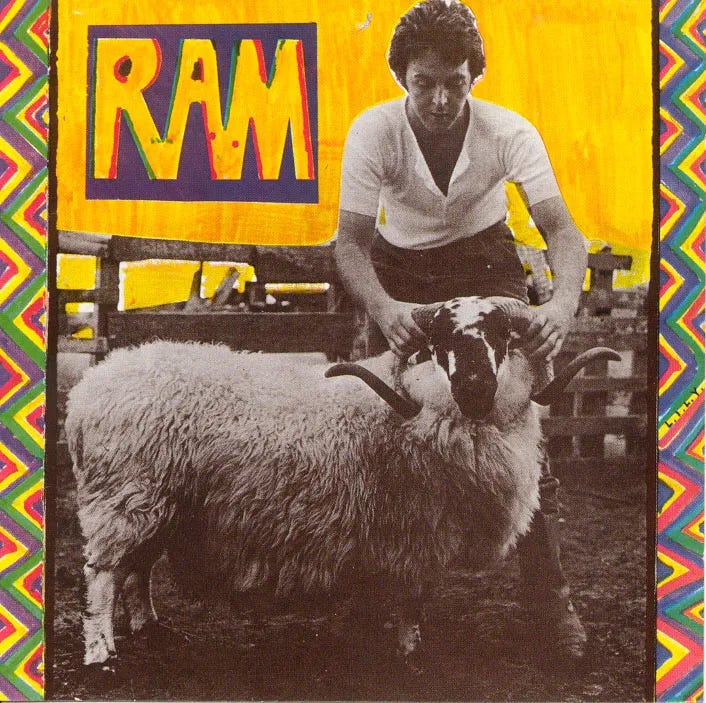
Ram - Paul & Linda McCartney (Just got an original copy on vinyl from this Etsy seller. Also, my dad sent me this great Pitchfork review which added so much insight and lore to my obsessing over it.)
Box for Buddy, Box for Star - This is Lorelei (New to me! Kind of a Porches/Elliott Smith combo?)
Eusexua - FKA Twigs
This Wasn’t Meant For You Anyway - Lola Young
Tapestry - Carol King
Adjust Brightness - Bilal
Alligator Bites Never Heal - Doechii (As if you needed another excuse to listen to this?)
A link to “Music From Saharan Cellphones,” which is “a compilation of music collected from memory cards of cellular phones in the Saharan desert.”
Recently published:
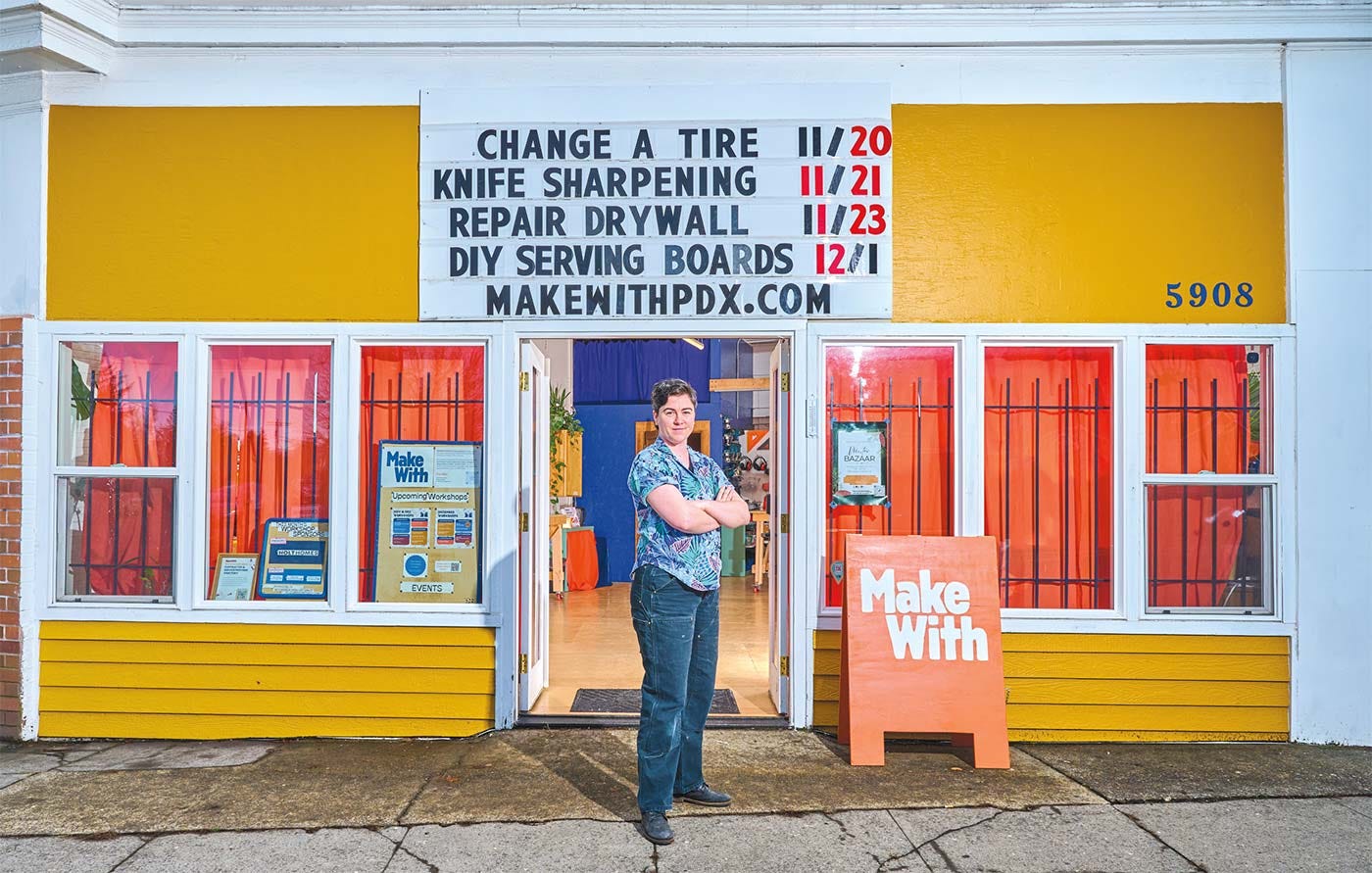
I mentioned this article a few newsletters ago, and it’s finally online! Loved writing this *so* much. Skill-Building and Collective Resilience at MakeWith Hardware and Learning Center, for Edible.
Profiled my amazing former boss Dana Frank for Edible, and discussed her Austrian wine venture & hospitality.
Not so recent, but one of my favorites. Wrote about archiving ourselves online, for Shelfy
Interviewed podcasters Charlie Bardey & Natalie Rotter-Laitman from Exploration: Live! for Willamette Week - *huge* for a girl like me :)
More soon!